



Our facilities
ECC laboratories are fully-equipped with cutting-edge tools and technologies, enabling accurate processing, testing, analysis, and characterization of rubber materials.
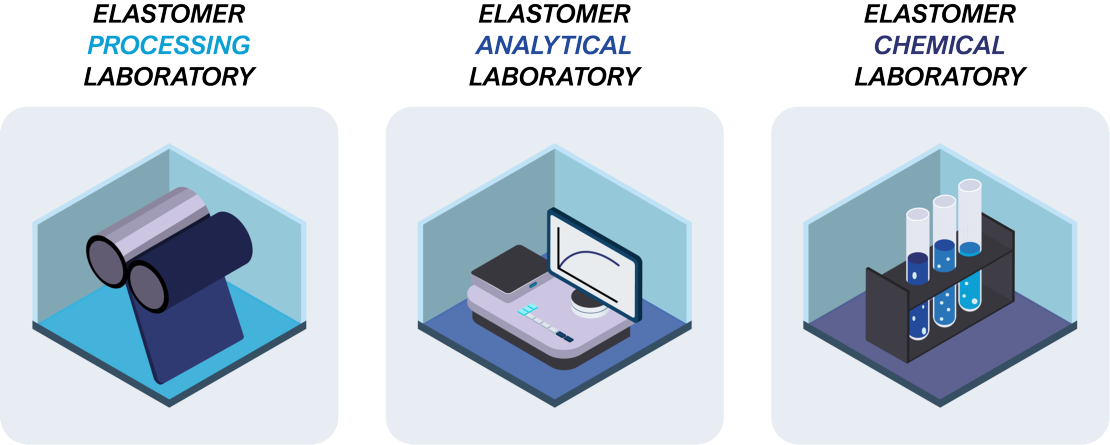
ECC OFFERS A WIDE RANGE OF SERVICES TO SUPPORT YOUR NEEDS
Material processing
ECC has fully equipped mixing lines to develop a wide range of rubber compounds. The mixing is carried out in accordance with standards, using in-house processing method or adhering to any customer-specific requirements.
Compounding equipment
Internal mixers

Internal mixer is a crucial piece of equipment used to mix and process raw materials to produce rubber compounds.
It provides efficient and uniform mixing.
Benefits:
- Efficient and uniforming mixing resulting in a homogenized rubber compound with consistent properties.
- Time-saving process.
- Reduced Labor Intensity since it automate the mixing process.
Our mixers are laboratory scale and the torque and temperature are recorded.
EQUIPMENT | DESCRIPTION |
|---|---|
Brabender 350S |
|
Brabender 350S |
|
Brabender Plastograph EC plus |
|
Mixing mills

Mixing mill, also known as two-roll mill, is an integral equipment of the rubber industry for the mixing and processing of materials.
It offers an effective solution for mixing, refining and homogenizing rubber compounds.
Benefits:
- Versatile equipment that can handle a wide range of rubber compounds.
- Uniform mixing and distribution of additives and fillers, leading to consistent compound properties.
Our mixing mills are laboratory scale.
Equipment | Description |
|---|---|
Schwabenthan |
|
Polymix 80T |
|
Compression molding
 Compression molding is a widely used manufacturing process for shaping various rubber compound materials. Rubber compounds can be vulcanized or shaped at a certain temperature and pressure.
It is particularly suitable for relatively simple and large-sized parts with excellent dimensional accuracy and surface finish.
Equipment | Description |
|---|---|
Wickert WLP1600 |
|
Material characterization
ECC has fully equipped testing service to provide a comprehensive characterization of rubber compounds. The testing is carried out in accordance with standards, using in-house testing method or adhering to any customer-specific requirements.
Processability test
Mooney viscometer
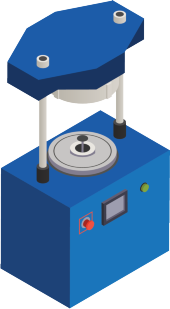 Mooney viscometer is a common equipment for evaluating the processability and the correlation between viscosity values and molecular mass of rubber compounds.
Mooney viscosity measures the viscosity of rubber compounds, offering valuable insights into their flow characteristics and overall processability.
It helps rubber manufacturers ensure consistent product performance (quality control) and allows them to adjust the formulation if necessary to achieve desired processing properties.
Mooney scorch can be used to measure the incipient cure time and the rate of cure during very early stages of vulcanization.
Stress relaxation can be correlated with the visco-elastic characteristics of the rubber compound. It is related to the rubber structure characteristics such as molecular mass distribution, chain branching, and gel content.
Equipment | Description |
|---|---|
Mooney viscometer PREMIER™ MV (Alpha Technologies) | Measurements:
Specifications:
|
Rubber Process Analyzer (RPA)
 Rubber Process Analyzer (RPA) is an important and highly versatile tool in the development of rubber compounds which offer detailed insights into the curing process and quality control in rubber industry.
This information help rubber manufacturers optimize their formulation and processing parameters to achieve the desired mechanical properties in the final product.
RPA is used for quantifying vulcanization characteristics, Payne effect measurements to ensure thorough filler dispersions, and predicting processability.
Vulcanization characteristics
The vulcanization characteristics provide valuable information about the vulcanization process of elastomeric compounds and a method to ensure consistency and quality control in rubber manufacturing processes.
These are compound-specific properties that determine, among other things, the vulcanization level and how long a specific product or test piece must be vulcanized.
Parameters:
- Minimum torque (ML): Indicator of the viscosity of the uncured composite.
- Maximum torque (MH): The peak torque value, representing the maximum state of cure. It correlates with the rubber's mechanical strength and other physical properties.
- Scorch time (ts2): The time necessary to reach a 2 unit increase in torque above minimum (this is the time a compound has to take the shape of a mold).
- Optimal vulcanization time (t90): The time taken to achieve 90% of its maximum torque or cure. It is an essential parameter as it determines the time required for the vulcanization process and influences the production rate.
Payne effect
The Payne effect is a phenomenon observed in filled rubber compounds. Fillers, such as carbon black, silica, or other reinforcing agents, are commonly added to rubber formulations to improve mechanical properties. However, the interaction between the fillers can significantly influence the mechanical behavior of the rubber compounds.
Payne effect It is the difference in modulus of a crosslinked rubber system when it is subjected to increasing deformation amplitude. The difference indicating a breakdown of agglomerates into primary particles and it is caused by the so-called filler-filler interaction within the polymer network.
EQUIPMENT | DESCRIPTION |
Rubber Process Analyzer RPA 2000 (Alpha Technologies) | Measurements:
Specifications:
|
Rubber Process Analyzer RPA-Elite (TA Instruments) | Measurements
Specifications:
|
SaMple preparation
Preparation of test specimens
 Test specimens preparation according to international standards or customer-specific requirements is a key element for laboratory testing.
Equipment | Description |
Multi-Head Die Cutter (Gibitre Instruments) | Specimen Cutting Dies - Cutters:Tensile
Tear
Strip
|
Physical characterization
Universal testing machine

Tensile stress-strain test is used to determine the modulus, tensile strength, elongation at break of vulcanized compounds.
However, tensile properties alone may not directly relate to the total end-use performance of the product because of the wide range of potential performance requirements in actual use.
Tear strength test is used to determine the tear strength of vulcanized compounds.
Since tear strength may be affected to a large degree by stress-induced anisotropy of the rubber as well as by stress distribution, strain rate, size of the specimen, and direction of testing, the results obtained in a tear test can only be regarded as a measure of the strength under particular conditions. Usually tear properties are reported as file force required to pull a rubber test piece apart using a tensile testing instrument under controlled conditions.
Adhesion test allows determine the force necessary to separate a rubber from other surfaces (fabric, fibre, wire, or sheet metal). The test provides valuable data for development and quality control of rubber compounds. It also serves as a screening test for the evaluation of various bonding agents, techniques, or both.
Compression test allows study the compression-deflection of rubber compounds. It determine the force required to cause a specified deflection in rubber compounds and is useful in comparing stiffness of rubber materials in compression. This test can be used by rubber technologists to aid in development of materials for compressive applications.
These properties depend both on the material and the conditions of test and therefore should be compared only when tested under the same conditions.
Equipment | Description |
Universal Testing Machine Zwick Z01 (Zwick/Roell) | Specifications:
|
Universal Testing Machine Zwick Z10 (Zwick/Roell) | Specifications:
|
Hardness
 Hardness test is based on the penetration of a specific type of indentor when forced into the material under specified conditions. This is an empirical test for the control process.
rdness generally denotes the resistance of material to local deformation, being measured as the resistance to penetration either by a loaded indentor (indentation hardness) or by a loaded sharp point moving over the surface (scratch hardness). Both these forms of tests are discussed below. Since hardness in this sense is related to the elastic modulus, it increases with increasing crosslink density, so that fully crosslinked polymers (ebonite) are the hardest, and it is reduced by plasticizers. Measurement of hardness by rebound resilience is done with metals and does not apply to high polymers, because their hardness and resilience are not directly related.
Equipment | Description |
Digital Hardness Tester to Shore (Zwick/Roell) | Specifications:
|
Abrasion resistance
 Abrasion test is used to estimate the relative abrasion resistance of different vulcanized rubber compounds. Since conditions of abrasive wear in service are complex and vary widely, no direct correlation between these tests and actual performance can be assumed.
This test is suitable for comparative testing, quality control, and research and development work
EQUIPMENT | DESCRIPTION |
Din Abrasion tester - (Montech Rubber Testing Solutions) | Specifications:
|
Compresion set
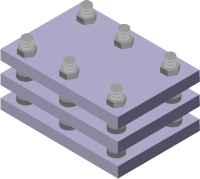 Compression set test is a reliable and repeatable method of testing the effect of compressive stress on an elastomeric material over a period of time. The test is mainly applicable to service conditions involving static stress and are frequently conducted at elevated temperatures.
The test results show the loss of elasticity of the material or its ability to return to its original thickness after prolonged compression, also known as material memory or permanent deformation.
EQUIPMENT | DESCRIPTION |
Compression set apparatus | Specifications:
|
Resilience
 Resilience is a function of both dynamic modulus and internal friction of a rubber. It is very sensitive to temperature changes and type of rebound resilience tester.
Rebound resilience tester is designed to measure percent resilience of a rubber compound as an indication of hysteretic energy loss that can also be defined by the relationship between storage modulus and loss modulus. The percent rebound measured is inversely proportional to the hysteretic loss.
EQUIPMENT | DESCRIPTION |
Reboud Resilience Tester 5109 (Zwick/Roell) | Specifications:
Specimen dimension
|
Fatigue
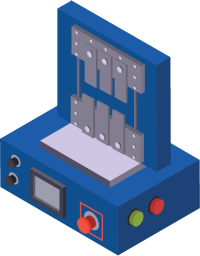 De Mattia fatigue tester gives an estimate of the ability of a rubber vulcanizate to resist crack growth of a pierced specimen when subjected to flexing. No exact correlation between these test results and service is implied due to the varied nature of service conditions.
Equipment | Description |
De Mattia Fatigue tester (Alpha Technologies) | Specifications:
|
Crosslink density
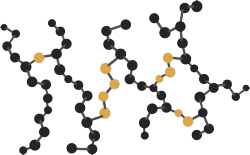 Crosslink density is a key property of rubber compounds and it refers to the concentration or density of chemical bonds, known as crosslinks, that connect polymer chains within the rubber matrix.
The crosslink density mainly influence the final performance of rubber products such as its elasticity, strength, and resistance to deformation.
Techniques:
Equilibrium swelling
The most widely used technique in the rubber field. The volume of the rubber network increases when a crosslinked rubber is immersed in a suitable solvent. The determination of crosslink density is based on the Flory–Rehner model for swollen polymer network.
Equipment | Description |
General chemical laboratory facilities (University of Twente) | Specifications:
|
Temperature Scanning Stress Relaxation (TSSR)
Technique based on the evaluation of the stress relaxation of rubber when a constant strain and an increasing temperature are applied. (Non-isothermal relaxation behavior)
EQUIPMENT | DESCRIPTION |
TSSR-Meter (Brabender) | Specifications:
|
Thiol-Amine method
This technique Allows the differentiation between poly- di- and monosulfidic crosslinks by selective cleavage of bonds.
The soft probe, provides the cleavage of the polysulfidic bonds (mono- and disulfidic bonds remain). Meanwhile, the hard probe, provide the cleavage of the poly- and disulfidic bonds. (monosulfidic bonds remain). The total crosslink density is determined by swelling experiments.
EQUIPMENT | DESCRIPTION |
General chemical laboratory facilities (University of Twente) | Specifications:
|
Freezing point depression temperature
The crosslink density measurement by this technique is related to the magnitude of the freezing point depression temperature (ΔTf) of solvents imbibed in swollen vulcanizates. Comparison of the transition temperature values of a confined and free solvent allows qualitative determination of the degree of crosslinking of elastomeric compounds (depends on the mesh size of the polymeric network).
EQUIPMENT | DESCRIPTION |
Netzsch 214 Polyma | Specifications:
|
Mooney-Rivlin
This tecnique allows the determination of crosslink density by mechanical test (stress-strain measurements) based on the theory of rubber elasticity. This experiment provide the crosslink density and entanglements density of the vulcanized system.
EQUIPMENT | DESCRIPTION |
Universal Testing Machine Zwick Z01 (Zwick/Roell) | Specifications:
|
Universal Testing Machine Zwick Z10 (Zwick/Roell) | Specifications:
|
Bound rubber
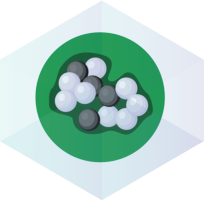 Bound rubber is formed by interactions between the rubber chains and the filler particles. It is the macroscopic effect of the physical absorption, chemical sorption, and mechanical interaction between the rubber chains and filler particles. It is considered as a factor in the estimation of filler reinforcement.
EQUIPMENT | DESCRIPTION |
General chemical laboratory facilities (University of Twente) | Specifications:
|
Dispersion
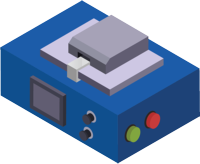 Dispersion of fillers in the rubber compounds plays a fundamental role in the performance of rubber products. It it is define as the degree of uniform distribution of a filler's primary unit into a compound.
Understanding the dispersion of a mixed compound enables users to optimize process parameters and provide a quality control tool.
Equipment | Description |
AlphaView Dispergrader (Alpha Technologies) | Specifications:Aperture Size: 12 mm x 6 mm Resolution:
Pixel Size:
|
Melting point
 Melting point is the temperature at which the material changes its phase from solid to liquid, under specified conditions. It is an important tool to identify the materials and to check the purity of the materials. This also helps in predicting the processing characteristics of materials.
Equipment | Description |
Melting Point Apparatus SMP3 (Stuart Scientific) | Specifications:
|
Spectroscopic techniques
Infrared Spectroscopy (IR)
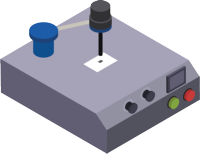 Infrared spectroscopy (IR) is a non-destructive analytical method commonly used in the rubber industry for material characterization, research and development purposes and quality control of materials.
It is a powerful tool that provides valuable informationfor (fingerprint identification) about the chemical composition and molecular structure of polymeric materials.
Equipment | Description |
Perkin Elmer Spectrum 100 series | Specifications:
|
Ultraviolet Light Spectroscopy (UV/Vis)
 Ultraviolet Light Spectroscopy (UV/Vis) serves as a fingerprint for identification and provides qualitative and quantitative analysis of additives that possess strong chromophores (e.g., antioxidants with aromatic rings). In this technique a given molecular species absorbs radiation only in specific regions of the spectrum where the radiation has the energy required to raise the molecules to some excited state. A display of absorption versus wavelength is called an absorption spectrum of that molecular species.
Equipment | Description |
UV-Visible Spectrophotometer Cary 100 BIO (Varian) | Specifications:
|
Chromatographic techniques
Gas Chromatograhy (GC)
 Gas Chromatograhy (GC) is a technique used for the identification and quantification of a large range of low-molecular weight (MW) substances and additives.
GC can be used as a relatively quick and simple technique to identify and quantify a number of analytes, including: residual monomers and oligomers, solvents, monomeric antioxidants, antiozonants, monomeric plasticisers, organic flame retardants.
Equipment | Description |
Shimadzu GC-2010 Plus | Specifications:
|
High-Performance Liquid Chromatograhy (HPLC) and Liquid Chromatograhy-Mass Spectrometry (LC-MS)
 HPLC and LC–MS instruments are usually employed to identify and quantify additives in rubber and plastic compounds that are either too involatile or insufficiently thermally stable to be analysed by either GC.
HPLC is very useful for the detection and quantification of relatively high-MW additives. It is the first-choice instrument for oligomeric or high MW antioxidants.
Equipment | Description |
HPLC Value System Agilent 1100 Series (Agilent Technologies) | Specifications:
|
Thin-Layer Chromatograhy (TLC)
 Thin-Layer Chromatography (TLC) is a relatively simple technique used for both the separation and identification of additives such as amine and phenolic antioxidants, and UV stabilisers.
EQUIPMENT | DESCRIPTION |
General chemical laboratory facilities (University of Twente) | Specifications:
|
Thermal techniques
Differential Scanning Calorimetry (DSC)
 Differential Scanning Calorimetry (DSC) measures the endothermic and exothermic transitions as a function of time and temperature.
It is used to characterize polymers (thermosets, thermoplastcis and elastomers). In the rubber analysis it provides quality control fingerprint thermograms from which formulation deviations can be determined.
Analytical work can be performed in both a non-oxidising nitrogen atmosphere (most commonly used) and in an oxidising air atmosphere (for investigations involving oxidation stability).
DSC can be used to investigate the effectiveness of antidegradants and fire retardants in thermal stability studies of a rubber compound.
Transitions measured:
- Glass Transition (Tg)
- Melting point (Tm)
- Volatilisation of ingredients or absorbed substances (e.g. plasticisers, water or solvents)
- Crystallization
- Curing
- Cure kinetics
- Oxidation
- Heat capacity
Equipment | Description |
Netzsch 214 Polyma | Specifications:
|
Thermogravimetric Analysis (TGA)
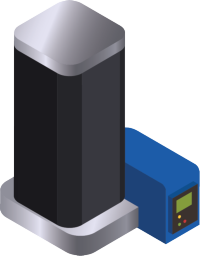 Thermogravimetric Analysis (TGA) is extremely useful technique for the analysis of rubber compounds related to their bulk composition and other important characteristics. It measures the mass of a sample as it is heated, cooled or held at a constant temperatura in a definded atmosphere and allows the detection of processes in which a mass variation occurs, such as: decomposition, sublimation, reduction, desorption, adsorption, etc...
TGA is especially useful to observe the thermal decomposition of materials and provides accurate quantification of the principal ingredients such as plasticisers, polymers, carbon black (CB) and inorganic species.
EQUIPMENT | DESCRIPTION |
TGA Q550 (Thermal Instruments) | Specifications:
|
Dynamic Mechanical Analysis (DMA)
 Dynamic Mechanical Analysis (DMA) is an indispensable tool for determining the visco-elastic properties of polymeric materials. This technique consists of applying the sample to an oscillating stress (or strain) and recording the temperature-dependent visco-elastic properties of the material.
It is used to study the influence of molecular structure on the physical properties of polymers.
DMA measurements are also of utmost interest for the tire industry, since the prediction of tire performance is usually evaluated by considering the viscoelastic properties of rubber. The “magic triangle” principle of the tire industry is related to three main materialspecific requirements relevant to the tread, such as rolling resistance, wet grip, and abrasion resistance; targeting lower fuel saving efficiency, driving safety, and extended lifetime, respectively.
Possible studies to perform on polymeric materials:
- Influence of fillers
- Effect of plasticizers
- Influence of crystallinity
- Influence of molecular weight
- Compatibilization in blends
EQUIPMENT | description |
Eplexor 2000 (Netszch) | Measurements:DMA:
Specifications:Temperature range: -150 – 500 °C Frequency range: 0.01 - 100 Hz Maximum static amplitude: 50 mm Maximum dynamic amplitude: +/- 10 mm Atmosphere: Air / Nitrogen Coolant: Liquid nitrogen Force cells: 50 / 500 N Modes: Tensile / Double shear / Compresion / 3 point bending |
Viscoanalyser VA2000 (Metravib 150) | Measurements:DMA
Specifications:Temperature range: -150 – 400 °C Frequency range: 0.001 - 200 Hz Maximum static amplitude: 50 mm Maximum dynamic amplitude: +/- 3 mm Atmosphere: Air / Nitrogen Coolant: Liquid nitrogen Force cells: 150 N Modes: Tensile / Double shear / Compresion |
Temperature Scanning Stress Relaxation (TSSR)
 Temperature Scanning Stress Relaxation (TSSR) provides Information about relaxation behavior and structure of polymeric materials. It is particularly suitable for material development and quality control during production and allows fast determination of the crosslink density of rubber compounds.
EQUIPMENT | DESCRIPTION |
TSSR-Meter (Brabender) | Specifications:
|
Specialized measurements and techniques
Grinding
 Grinding process is used to prepare samples and reduce the particle size of the materials.
EQUIPMENT | DESCRIPTION |
Universal Cutting Mill Pulverette 19 (Fritsch) | Specifications:
|
Devulcanization
 Devulcanization process results in the selective breakup of the chemical network in the rubber compound. It consists of the cleavage of the intermolecular bonds of the network, such as carbon-sulfur (C–S) and/or sulfur-sulfur (S–S) bonds, which breaks down the macromolecular chains without damaging the backbone network and prevents material degradation.
Devulcanization from rubber waste products has the greatest potential in terms of recycling, as vulcanized rubber waste can be mixed, processed, and revulcanized like virgin rubber.
EQUIPMENT | DESCRIPTION |
Brabender Plastograph EC plus | Specifications:
|
General chemical laboratory facilities (University of Twente) |
|
Laboratory Abrasion & skid Tester (LAT) 100
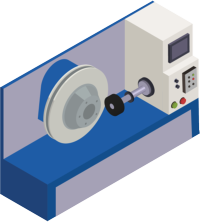 Laboratory Abrasion & skid Tester (LAT) 100 is a equipment designed to accurately simulate a wide range of selectable road conditions for measuring abrasion and friction of tread compounds.
Tire producers can save time and money by evaluating tire properties before production starts.
Equipment | Description |
Laboratory Abrasion & skid Tester (LAT) 100 (VMI) | Specifications:
|
Aging
 Aging test allows to establish the changes in physical properties of a rubber compound for a given period at elevated service temperatures. This test attempt to predict the long-term life at lower temperatures.
Equipment | DESCRIPTION |
Convection Oven T6060 (Heraeus) | Specifications:Max. temperature: 250 ºC. |
Drying (Hot air) Oven LUT 6050 (Heraeus) | Specifications:Max. temperature: 250 ºC. |
Vacuun Oven OVL570 010J (Gallenkamp) | Specifications:Max. temperature: 200 ºC. |
Drying Oven (forced convection) FD 115 (Binder) | Specifications:Max. temperature: 300 ºC. |
Soxhlet extraction
 Soxhlet extraction is the procedure for removing the highly volatile organic additives present in the rubber products, such as rubber process oils, antioxidants, anti-ozonants, waxes, organic activators, accelerators, etc. This is important for the drinking water and food industry, where a maximum permissible extractable content is required.
Extraction process provides two different fractions:
- Extracts: solvent with high volatile organic materials (Detailed analysis of the organic materials can be performed subsequently).
- Extracted: rubber sample without the extractable organic material (Analyses of polymer, ash, fillers, etc., can be conducted).
EQUIPMENT | DESCRIPTION |
General chemical laboratory facilities (University of Twente) |
|